Key Takeaways
Docking a PWC safely is about control, not speed.
Proper alignment and a slow approach prevent overshooting.
Practice builds confidence for new riders.
Conditions like wind and current affect docking approach.
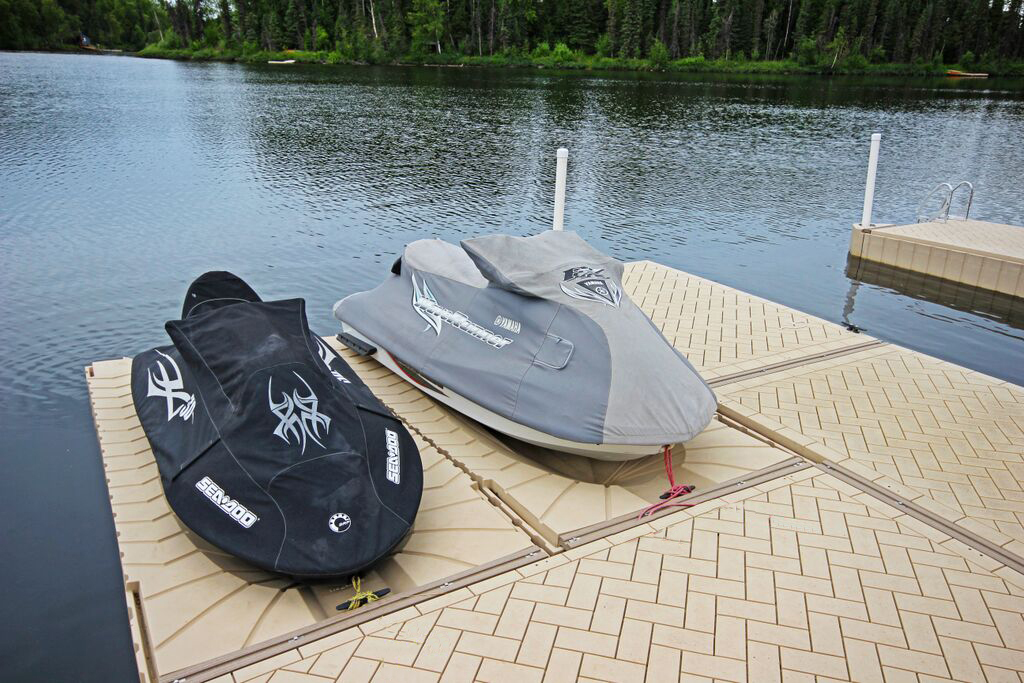
A ShorePort system is designed to guide and support safe entry.
Why Docking a PWC Can Feel Intimidating at First
If you’re a new PWC rider, learning how to dock a jet ski can understandably feel a little intimidating, much like when you first learned to parallel park a car. But unlike parking a car, you don’t have brakes or a traditional steering wheel. You may also need to deal with movement from wind, waves, and momentum—all while trying to guide your watercraft onto a relatively small platform.
The good news is that every experienced rider started in the same place. With some practice, good habits, and a PWC docking setup designed to facilitate loading and launching, storing your jet ski quickly becomes an intuitive part of every ride.
How a PolyDock ShorePort Helps Guide Your Entry
The ShorePort PWC floating dock is designed with several key features that enhance safety and ease of use for riders of all experience levels (A&E Motorsports LTD, 2020).
Intuitive Drive-On Design: The ShorePort features a sloped entry and self-aligning rollers that guide your watercraft into place with just a gentle throttle.
Adjustable Roller System: The ShorePort is equipped with three polyurethane rollers that can be adjusted to fit various hull shapes and PWC models, ensuring a secure fit.
Safety Features: The ShorePort’s wide walkways and textured, slip-resistant surface help riders secure their footing when docking, boarding, or launching PWCs.
Together, these features make docking a PWC safer, more predictable, and user-friendly even for new riders.
Step 1: Line Up Your Approach Early
One of the most important jet ski docking tips is to begin aligning your approach well before you reach the dock. As you get closer, approach at idle speed and align the PWC with the center of the ShorePort so that you’re aligned with the tracking lanes and rollers.
Avoid making sharp steering corrections at the last second. By keeping your eyes locked on the center of the port early on, your body and watercraft will naturally follow that visual line for a seamless entry.
Step 2: Reduce Speed and Stay in Control
When it comes to jet ski docking safety, slower is always better. Close the throttle as you approach and let momentum carry you to the floating PWC port. A slow, controlled approach gives you more time to react and helps prevent overshooting the dock or making abrupt steering movements.
Step 3: Maintain Light Throttle Into the Port
When the nose of the jet ski contacts the ShorePort, give it a slight throttle—just enough to power the watercraft onto the port and let the rollers do their job.
Remember, it’s much better to not use enough throttle, back off, and try again than to overshoot the floating dock and potentially damage the watercraft. If you think the rollers aren’t working, they might need adjustment to suit the size of your PWC.
Step 4: Stop at the Right Point (Avoid Overshooting)
Once your PWC is securely on the ShorePort, release the throttle completely so the watercraft settles into its resting position. You want to glide gently up until the hull rests securely against the molded bow stop. The goal is to have the watercraft come to a halt naturally.
Docking in Wind or Current: What to Adjust
Take a moment to assess which way the water or wind is moving before making your approach. To counter the drift, you may need to point the nose of your PWC slightly to one side, straightening it as you close in on the ShorePort.
When working against wind or current, it's often helpful to approach even more slowly than usual (Discover Boating, n.d.). A controlled pace gives you more time to compensate for drift while maintaining proper alignment with the dock
Common Docking Mistakes New Riders Make
While premium jet-ski docks are designed for the utmost ease of use, some bad habits can make docking on floating ports more difficult than it needs to be.
Coming in Too Fast: Approaching the dock with too much speed not only increases the risk of overshooting; it also reduces your reaction time should factors like wind, waves, and current come into play.
Overcorrecting Steering: Making jerky, dramatic handlebar movements instead of smooth, micro-adjustments can throw the PWC off balance and cause it to veer unpredictably.
Misjudging Alignment: Pulling in at an angle or failing to center the bow with the rollers often leads to uneven weight distribution. This can make the jet ski sit crooked on the port, forcing you to back off and try again.
The good news is that these rookie mistakes are easy to correct. With a little practice, most riders quickly develop the smooth, consistent habits that make docking feel effortless.
Practice Builds Confidence Quickly
Like any new skill, repetition is the key to mastery. Don't be discouraged if your first couple of attempts feel a bit clunky. The more often you practice approaching the dock at a controlled speed and consistent angle, the more natural the process becomes.
Spend a quiet afternoon practicing your approach when the water is calm. Before you know it, driving onto your ShorePort will become pure muscle memory, leaving you completely confident every time you wrap up a day on the water.
Enter your zip code in the dealer locator tool at the bottom of this page to learn more about the ShorePort and Waterfront Brands’ line of premium PWC floating docks. This will give you a list of authorized dealers near you along with their contact information.
FAQs
How do you dock a jet ski without hitting the dock?
To dock a jet ski safely, approach the drive-on port at idle speed and align the PWC with the tracking lanes and rollers. Use short, gentle throttle pulses to maintain steering control without building up excess forward momentum.
What speed should you use when docking a PWC?
When docking a PWC, your natural momentum should do most of the work as you near the dock. Use only enough throttle to maintain steering and forward momentum, allowing the rollers to do the work for you.
How do you line up a jet ski with a dock port?
Align your approach well before you reach the dock. As you get closer, approach at idle speed and align the PWC with the center of the ShorePort so that you’re aligned with the tracking lanes and rollers.
By keeping your eyes locked on the center of the port early on, your body and watercraft will naturally follow that visual line for a seamless entry.
Can wind or current affect jet ski docking?
Yes, wind and current can throw a PWC off course during a docking approach. In these conditions, it's important to reduce speed, allow extra time for corrections, and adjust your approach angle slightly to compensate for drift.
How long does it take to learn to dock a jet ski safely?
Most riders become noticeably more comfortable after just a few practice sessions. Docking is a skill that improves quickly as you learn how your PWC responds at low speeds.
References:
A&E Motorsports LTD (May 27, 2020). New Shoreport PWC Docking system, https://www.youtube.com/watch?v=j336czAjSd0
Discover Boating (n.d.). How to Dock a Personal Watercraft (PWC), https://www.discoverboating.com/resources/docking-a-jet-ski-personal-watercraft-waverunner


