Key Takeaways
Floating docks automatically rise and fall with changing water levels — ideal for lakes, rivers, and reservoirs.
PolyDock’s modular, rotationally molded design provides exceptional stability, strength, and flexibility.
Unlike fixed or sectional docks, PolyDock platforms prevent warping and shifting during floods or droughts.
Accessories like adjustable gangways and anchoring systems keep your dock secure and level through all conditions.
PolyDock’s interlocking floating dock systems offer reliable performance for residential, marina, and resort use.
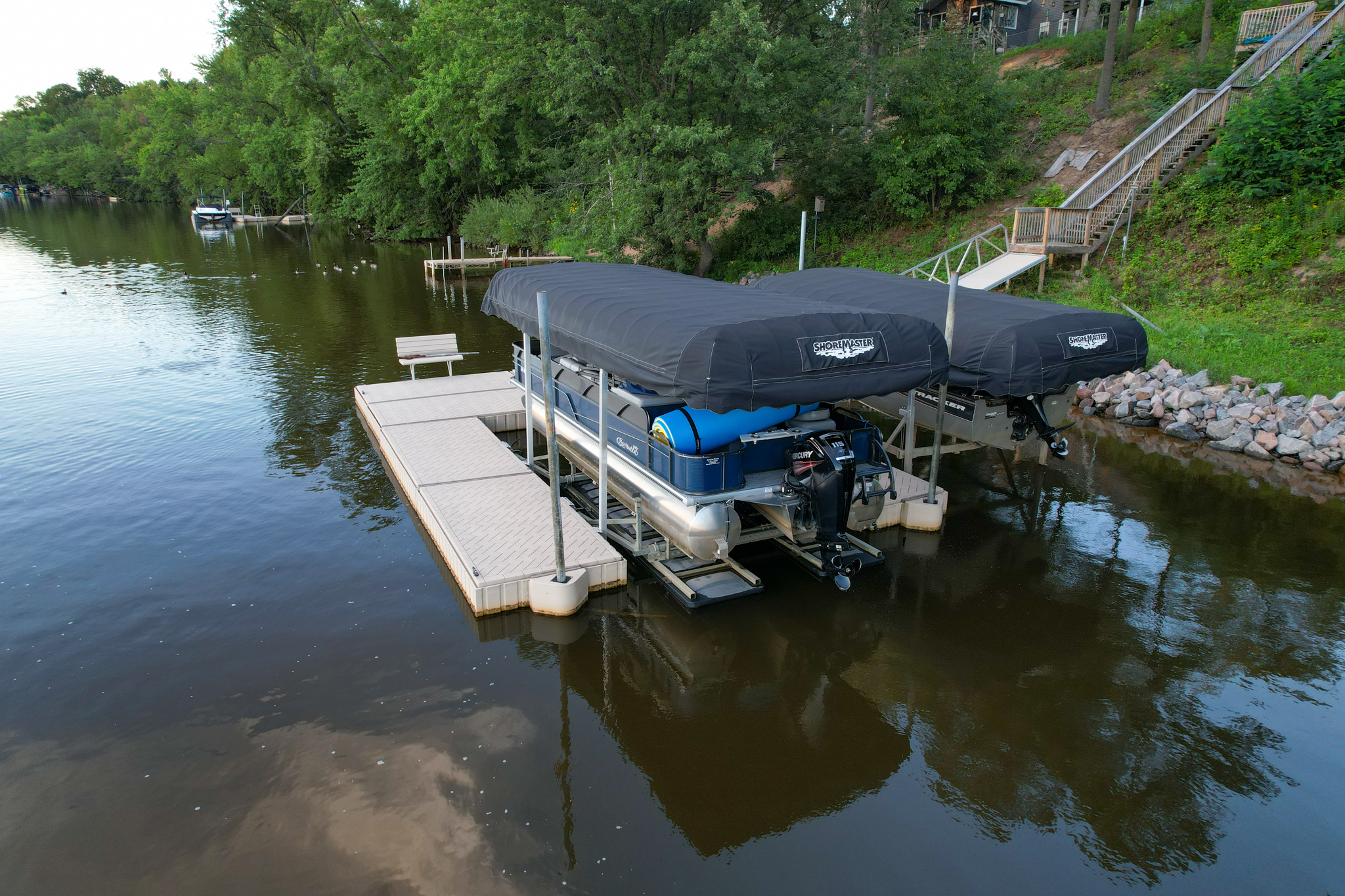
Why Floating Dock Systems Outperform Fixed Docks on Fluctuating Water
Simply put, floating docks perform better than fixed docks on waterfronts with fluctuating depths because they move in tandem with the water. Unlike fixed or standing docks, which can become submerged during high water events (such as seasonal flooding, heavy rainfall, or reservoir drawdowns) or sit awkwardly above the waterline when water levels drop, floating docks maintain a consistent freeboard.
This creates safer boarding for boats and personal watercraft, smoother transitions for swimmers and passengers, and a more reliable dock experience year-round.
Fixed docks vs. floating docks—how movement affects usability and safety.
Fixed docks, especially those supported by pilings driven into the ground, offer unparalleled stability. However, their rigidity can also work against them during heavy wave action, boat traffic, or extreme weather events. When a particularly strong wave hits, a moored boat is effectively pushed against a rigid wall. In contrast, floating dock systems move with the water, naturally absorbing and dissipating energy. This flex reduces impact on mooring lines, cleats, tie-off points, and boat hulls.
That said, not all floating docks perform in this optimal fashion. Traditional wood-frame floating docks can suffer from excessive movement over time, leading to loose fasteners, popped nails, splintered decking, and uneven walking surfaces.
When to choose a floating dock system
Fluctuating Water Levels: If your lake, river, or reservoir experiences seasonal drawdowns, flooding, tidal influence, or dam-controlled water level changes, a floating dock is typically the most practical choice. Because the platform rises and falls with the water, it maintains a consistent deck-to-water height, eliminating usability and safety concerns posed by submersion or excessive gaps.
Deep Water Installations: In deep water (averaging over six feet deep), installing a fixed dock often requires longer pilings, specialized equipment, and higher installation costs. In some cases, driving pilings to the required depth may not be feasible at all due to soil conditions or environmental restrictions. Floating dock systems can work around this challenge by using anchoring systems instead of pilings, making them more adaptable and economical solution for deeper waterfronts.
Unstable Terrain: Shorelines with soft mud, shifting sediment, steep drop-offs, or rocky bottoms can make it difficult to secure pilings or properly level a fixed dock. Floating dock systems rest on the water’s surface instead of relying on the lakebed for structural support, allowing them to perform reliably regardless of uneven or unpredictable underwater terrain.
How Floating Dock Systems Adapt Naturally to Water Changes
While basic flotation will enable any platform to rise and fall with the water, a floating dock’s stability largely depends on the interplay between a system’s buoyancy, structural design, and anchoring.
Buoyant design explained — how floating modules respond to rising/falling water.
While many entry-level floating docks simply sit on top of the water like a collection of bobbing rafts, PolyDock is precision-engineered for superior stability. Each section is rotationally molded with recessed chambers on the underside, which are designed to trap air between the dock and the water surface. This creates a suction anchor that effectively enhances the dock’s buoyancy, weight capacity, and stability (Brinson Marine, 2023).
As water levels rise or fall, the trapped air increases buoyancy while simultaneously creating a subtle suction effect that resists excessive lift or roll. The result is a dock system with both upward stability (preventing the dock from sinking under load) and downward stability (preventing sections from popping up or tilting as weight shifts). This allows PolyDock floating docks to feel as solid as they do underfoot while still moving seamlessly with changing water levels.
For more information, check out our blog on how floating docks work.
Anchoring systems that maintain alignment and stability.
At PolyDock, we pride ourselves on designing floating dock systems that can withstand challenging marine conditions. We also understand that each dock layout is unique, with each shoreline, lake, river, or ocean bottom varying from location to location. That’s why we offer a diverse collection of floating dock anchors to support various installation and waterfront challenges.
Pipe Brackets: Pipe brackets mount anywhere along the perimeter of the PolyDock system, securing the dock to vertical pipes driven into the lakebed. This allows the dock to slide vertically along the pipes, easily adjusting to water level changes while maintaining stability and alignment. Pipe brackets are ideal for anchoring PolyDock in calm, shallow waters.
Chain Anchor Guides: Our anchoring solution for deep water or impenetrable lake bottoms, the PolyDock Chain Anchor Guide combines a pipe bracket with a galvanized steel tube insert. The anchor chain runs through this tube and is locked into a key slot, providing a secure, adjustable connection point.
Chain Anchor Plates: Our most versatile and popular anchoring method, this lighter-duty plate attaches directly to the dock and features a machined key slot that allows the anchor chain to be easily adjusted and locked in place. Chain anchor plates are perfect for locations with deep water or hard/shale bottom conditions.
Stiff Arms: PolyDock stiff arms allow you to anchor the floating dock to a seawall, deck, post, or other abutments onshore. They feature rigid steel arms with pivot joints, allowing the dock to rise and fall with water levels while being secured at a fixed distance from the shore. They’re excellent anchoring solutions for locations where augering into the lake bottom, river bed, or sea floor is restricted or prohibited.
Pile Hoops: PolyDock Pile Hoops allow the dock to slide vertically along fixed pilings. This is the most robust solution for marinas, commercial docks, and exposed or high-traffic areas.
The best anchoring system often combines multiple solutions to keep your dock where it should be— aligned, level, and secure—through variable water conditions.
Aluminum gangways and ramps that flex and adjust safely.
If you’re bridging a gap from a high seawall, navigating a steep embankment, or connecting PolyDock sections to a fixed structure, adding a floating dock gangway to your setup facilitates transitions, logistics, and access for people with mobility issues.
For shorter spans or gradual slopes, PolyDock offers aluminum ramps with three decking options (Cedar, Glacier, and Titan).
Inside the PolyDock Difference
As an industry leader across North America, PolyDock’s floating dock systems are synonymous with superior construction, versatility, and ease of ownership. For decades, our team has pushed the boundaries of what a floating dock could be so waterfront enthusiasts can do more of what they love on the water.
Durable rotationally molded polyethylene construction.
Unlike floating docks with separate frames, decking, and flotation, PolyDock takes an innovative approach, utilizing modular, rotationally molded high-density polyethylene (HDPE) that integrates the deck surface and flotation into a single, seamless unit. The rotational molding process creates seamless, one-piece structures, eliminating the need for joining or welding, which can create weak points (RotoMold USA, n.d.).
HDPE is a popular choice for floating docks due to its excellent durability and resistance to rotting, corrosion, impacts, and UV damage. These properties enable HDPE to perform in various environmental conditions, from calm tropical lakes to frigid coastal waters.
Modular connections for custom layouts and long-term adaptability.
PolyDock is available in a range of section sizes, including 4’ x 6’, 3’ x 10’, 4’ x 10’, 5’ x 10’, 6’ x 8’, and 4’ corner sections. These units seamlessly fit together like building blocks, enabling owners to design tailored dock configurations to suit unique shorelines, changing needs, and evolving lifestyles.
This means you can start with a basic single-slip setup and incrementally add sections to create extended walkways, protected areas, or entertainment spaces. We also offer a comprehensive catalog of plug-in dock accessories—including furniture, watersport racks, ladders, ramps, and gangways—allowing you to transform your waterfront from a simple platform for launching and docking boats to a versatile outdoor activity hub.
This also means you can have an existing fixed dock setup and add PolyDock sections to expand your waterfront footprint. Whether you’re outfitting a residential lakefront, a commercial marina, or a campground launch area, PolyDock offers a highly customizable modular floating dock solution that can grow with you.
Textured, slip-resistant surface and UV protection for longevity.
PolyDock’s top surface features a herringbone brick pattern engineered for slip resistance and efficient water runoff, which helps prevent ice layering and reduces trip hazards in cold or wet conditions. We also infused our polyethylene resin with UV-8 inhibitors to prevent fading and brittleness from prolonged sun exposure.
This translates to a walking surface that feels great on foot, whether you’re strolling barefoot on a bright summer afternoon or stepping out in sturdy boots on a crisp autumn evening.
Compatible accessories for boaters, anglers, and lakefront homeowners.
With PolyDock, customization goes beyond the dock layout. Our accessories catalog lets you further enhance the convenience and functionality of your dock system with seamless enhancements, including ladders, handrails, watersport racks, cleats, and even seating and furniture.
With infinite customization options, you can create the optimal floating dock platform, whether for a private lakeside home or commercial waterfront applications.
Design Options for Any Shoreline
PolyDock is designed to grow with your changing needs. The modular system allows you to start with a basic floating platform and add sections, accessories, or reconfigure layouts as your shoreline or waterfront lifestyle evolves.
We offer a range of section sizes, including 4’ x 6’, 3’ x 10’, 4’ x 10’, 5’ x 10’, 6’ x 8’, and 4’ corner sections, allowing you to customize your waterfront space to suit your unique lifestyle requirements.
Residential floating docks for lakes and rivers.
PolyDock’s innovative design utilizes a connection plate system that enables waterfront homeowners to slide accessories, such as furniture and seating, steps and ladders, watersport racks, and drive-on jetski ports, into pre-molded slots anywhere along the dock perimeter without requiring special tools.
So whether you want to extend your home’s living spaces to the water’s edge or create the ultimate outdoor activity hub, you can build your dream waterfront with PolyDock.
Marina and commercial setups.
PolyDock offers a practical and reliable solution for marinas and commercial establishments. Whether you need additional slips to accommodate more boats, wider pathways for customers, or designated service areas for special events, you can easily add sections or reconfigure existing layouts to suit the day’s needs.
Our accessories catalog lets you further enhance your dock system’s convenience and functionality. This includes seating and furniture, ladders, gangways, racks, bumpers, and even dockside grills. With infinite customization options, you can create the optimal floating dock for various commercial waterfront applications, including campgrounds, resorts, and restaurants.
Floating dock extensions for deeper or seasonal areas.
Our modular floating docks are highly configurable and easy to add to as your needs change. Connect multiple segments to the walkway to create an entertainment space or add docking capacity for PWCs. Whatever you need from your waterfront, PolyDock custom docks allow you to live your best life.
Installation and Maintenance for Fluctuating Waters
Anchoring options for deep or soft bottoms.
For deep muck, chain anchor plates are often the best solution. These connect the floating dock to heavy concrete deadweights resting on the lakebed. The weights settle into the silt, using the suction of the muck itself to create a virtually immovable hold.
If the bottom is simply too unstable for any anchor, stiff arms allow you to secure the floating dock to a seawall, deck, post, or other abutments onshore.
Easy install, reconfiguration, and off-season storage.
One of PolyDock’s greatest advantages is its ease of installation, thanks to its manageable weight and simple assembly. A standard residential configuration can typically be assembled in a single afternoon by two adults with basic hand tools. The modular sections float easily into position, and the connectors tighten down from the top, turning what used to be a major construction project into a manageable DIY task.
This ease of installation also translates to quick removal for areas that require offseason storage. And because the material is rot-proof, you don’t need to worry about specialized indoor storage. Simply stack them, cover them, and they are ready for the first warm day of spring.
Routine cleaning and inspection for year-round performance.
Most cleaning can be handled with a broom or a standard garden hose to wash away bird droppings or pollen. For tougher spots or algae at the waterline, a pressure washer (on a low setting) or a mild, eco-friendly detergent is all you need to restore the finish.
Beyond cleaning, we recommend a simple seasonal audit. At least twice a year, walk your system to check that connector rods are tight and anchoring chains haven’t developed excessive slack due to water level changes. This quick check ensures your system remains safe, stable, and silent for the season ahead.
Ready to discover the joys of the best floating dock system for changing water levels? Enter your zip code in the dealer locator tool below to find authorized floating docks for sale near you.
FAQs
Are floating docks safe during high or low water?
Yes, floating docks are arguably the safest option for fluctuating conditions because they self-level, ensuring the distance from the deck to the water remains consistent regardless of depth changes. This eliminates the dangerous drops or steep climbs associated with fixed docks during floods or droughts.
What anchoring system works best for deep water or variable depths?
For deep water or locations with significant level fluctuations, deadweight anchoring (using heavy concrete weights connected by chains or cables) is typically the most effective solution. Unlike fixed pipes, which can be too short for rising water or unstable at great depths, a chain-and-anchor system allows the dock to rise and fall naturally while maintaining its position. This setup provides the necessary flexibility to handle tidal changes or reservoir drawdowns without requiring constant manual adjustment.
Can I install a floating dock myself?
Most standard residential configurations can be assembled in a single afternoon by two adults using basic hand tools. The sections are lightweight enough to maneuver, and the connectors are designed for intuitive assembly. These features turn what used to be a major construction project into a manageable weekend task.
However, we recommend scheduling a site assessment with an authorized PolyDock dealer to help determine the optimal anchoring solution for your shoreline. This ensures that the dock remains stable and secure under varying conditions.
How long do PolyDock floating docks last?
A PolyDock floating dock system is engineered to last for decades. Many of the first docks manufactured in 1998 are still in use today.
References:
Brinson Marine (2023). Looking for Floating Dock? Why ShoreMaster Polydock might be the fit for you! https://www.youtube.com/watch?v=1D6s4oPm8zk&t=124s
RotoMold USA (n.d.). What is Rotational Molding? https://rotomoldusa.com/rotomold/#:~:text=Definition,slowly%2C%20both%20vertically%20and%20horizontally


