
Modular floating docks allow you to transform your property from a simple shoreline space into a versatile, dynamic haven tailored to your unique requirements, whether you’re a waterfront homeowner, marina operator, or business looking to maximize your space.
Below, we walk you through the primary advantages of PolyDock’s innovative floating dock systems and why they might be the optimal solution for enhancing your waterfront’s functionality, aesthetics, and value.
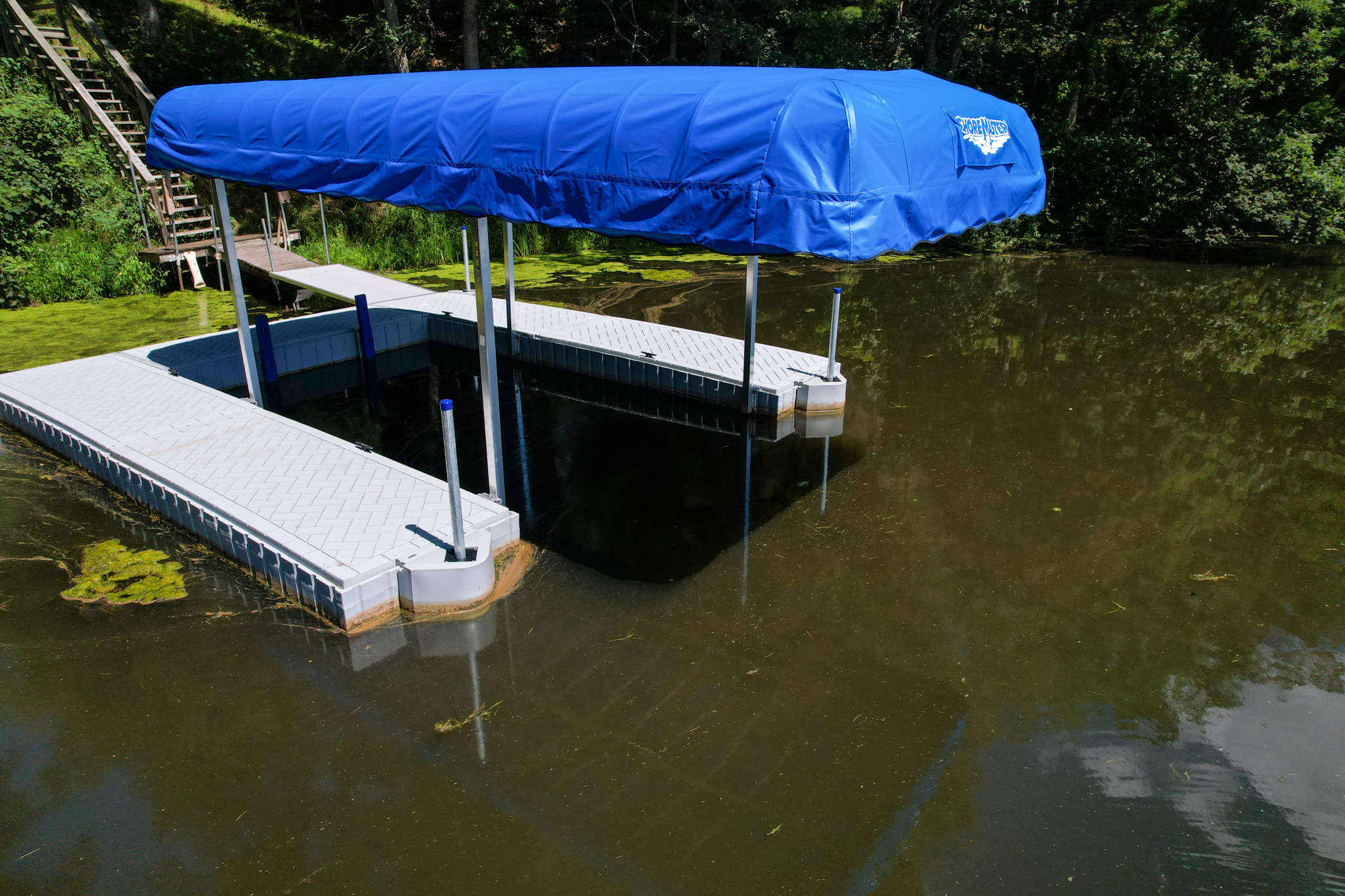
Unparalleled Adaptability: Thriving in Changing Water Conditions
Seasons change. Adverse weather events occur. Water levels fluctuate. These are the realities of waterfront living. In Lake Erie, for example, sustained high winds from one direction can push the water level up at one end of the lake, oscillating as barometric pressure changes (eek! n.d.). Floating docks seamlessly adapt to these environmental fluctuations, ensuring the platform remains usable, unlike fixed docks, which can become submerged or inaccessible during significant water level changes.
Floating docks also have minimal impact on the natural shoreline. By moving with the water, they avoid the erosion and structural damage that can occur with fixed docks during severe weather events, making them a more sustainable and environmentally friendly option.
Effortless Installation and Portability: Setting Up Your Waterfront Oasis with Ease
Another crucial advantage of floating docks is their ease of installation. Unlike traditional docks, which often require extensive pilings and complex underwater construction, floating docks can be assembled and placed in the water with minimal effort. PolyDock systems, for example, utilize a snap-lock or slide-in connection system, eliminating the need for advanced carpentry skills or specialized equipment.
PolyDock modular sections can be attached to other sections at any point along their perimeter using an intuitive system of brackets, connectors, and rods. These modular platforms come in a range of section sizes (including 4’ x 6’, 3’ x 10’, 4’ x 10’, 5’ x 10’, 6’ x 8’, and 4’ corner sections) to help you create the optimal layout for your specific applications. This system also makes removing it easy for seasonal storage or during extreme weather events.
Durability and Low Maintenance: Built to Last, Designed for Enjoyment
As with any structural investment, you want it to be as durable and low maintenance as possible. And that’s exactly what you get with PolyDock floating docks. While other solutions consist of separate frames, decking, and floatation systems, PolyDock takes an innovative approach, utilizing rotationally molded high-density polyethylene (HDPE) to integrate the deck surface and flotation into a single, seamless unit. This innovative construction technique reduces the number of moving parts and potential points of failure.
HDPE is a popular choice for floating docks due to its excellent durability and resistance to rotting, corrosion, impacts, and UV damage. This polymer is virtually maintenance-free and does not absorb water, preventing waterlogging and ensuring long-lasting buoyancy (Shell, n.d.). These properties enable PolyDock floating docks to perform reliably in diverse marine environments, from tranquil forested lakes to frigid coastal waters.
Versatility and Customization: Creating Your Ideal Waterfront Space
The modular design of PolyDock systems ups the ante on flexibility, allowing owners to reconfigure or expand dock layouts as their needs change. With a range of section sizes and a catalog of accessories, you can create tailored solutions for virtually any waterfront application, from residential floating docks with boat slips and swimming platforms to commercial applications for marinas, campgrounds, and restaurants.
Imagine having a dedicated spot to enjoy your morning coffee, a separate section for your jet skis, and an uncluttered walkway to your boat slip – all facilitated by a well-designed floating dock. This makes the waterfront more aesthetically pleasing and enhances safety by making the dock less cluttered. Floating dock systems also enable commercial establishments to create extra space for special events. Then, after the function, they can easily remove the added sections and store them until the next one.
Authorized PolyDock dealers can work closely with you to assess your waterfront characteristics, understand your specific requirements, and recommend a customized dock layout that optimizes your space. Contact us today for a list of authorized PolyDock partners in your area.
Cost-Effectiveness: A Smart Investment for Your Waterfront Property
Building a floating dock on a lake is a fantastic way to enhance your waterfront’s functionality, aesthetics, and property value. They cater to a broad spectrum of waterfront applications, from private residences looking to extend their living spaces to commercial operations needing to expand their facilities. PolyDock systems open up infinite possibilities for enjoying and maximizing your shoreline.
With a floating dock system that’s equal parts durable, versatile, and easy to own, PolyDock is as smart an investment as you can make for your waterfront property.
Choosing the Right Floating Dock for Your Needs
Purchasing a floating dock is a significant investment, and there are several factors you need to consider to ensure you choose the best option for your needs. Here are the primary considerations that will help guide your choice:
- Space and Intended Use: Assess the size and shape of your shoreline and the activities you plan to enjoy or functions you need to serve. Understanding your intended applications will help you design the optimal layout with the necessary functional enhancements to amplify your waterfront experiences.
- Shoreline Characteristics: Waterfront conditions, such as water depth and shoreline characteristics, will dictate the ideal anchoring system. This may involve pilings, chain anchors with weights, or stiff arms. PolyDock offers pipes up to 21’ to ensure customers have an anchoring solution for any environment.
- Local Regulations: Check local regulations and requirements for installing a floating dock in your area. Zoning ordinances may specify allowable dock sizes, materials, and installation sites. In Florida, for instance, the Department of Environmental Protection outlines a general permit process for floating vessel platforms and boat lifts (Florida Department of Environmental Protection, n.d.).
- Long-Term Needs: The best docking solution is the one that can adapt as your needs and interests evolve. Whether adding jet skis to your fleet or turning your floating dock into an extension of your home, choosing a versatile solution lets you maximize your investment.
Finally, establish a budget before looking for options offering the best value. Modular docking systems are usually priced based on the dock section dimensions. For example, a 3’ x 10’ PolyDock section starts at around $1,400, while the larger 5’ x 10’ section starts at around $2,400. While there are more affordable options, such as platforms constructed over airtight barrels, these entry-level solutions fall short of the reliability and performance offered by innovative floating dock systems.
Remember, while investing in a quality floating boat dock may involve higher upfront costs, it can save you maintenance and replacement costs in the long run. Contact us today to discuss your requirements, get a free quote, and discover how our solutions can elevate your waterfront experiences.
FAQs
-
What are the different types of floating docks available?
In addition to PolyDock, ShoreMaster also offers premium floating docks. Their RhinoDock Systems feature truss steel frames, high-density polyethylene floats, and a range of decking options and roofing configurations. This top-of-the-line docking system is ideal for multi-level residential docks or full-service marinas.
-
How do I maintain my floating dock to ensure its longevity?
Here are some maintenance essentials:
- Regular Cleaning: Wash the dock with mild soap and water to remove dirt, algae, and debris. Use a regular garden hose instead of a power washer to avoid damaging the dock surface and its anti-slip properties.
- Periodic Inspection: Routinely check the dock for loose hardware, punctures, or signs of wear and tear. Address any issues promptly to avoid costly repairs and safety issues.
- Winterization: If you’re in an area with freezing temperatures, remove the dock and secure it in a sheltered space during winter to prevent ice damage.
Remember, floating docks are most suitable for small lakes and protected bays. If your beach area is routinely exposed to boat wakes or large waves, a floating dock may not be the most appropriate solution.
-
What permits are required for installing a floating dock?
Installing a floating dock usually requires obtaining permits from various local, state, and federal agencies. The specific paperwork needed can vary depending on the location and the size of the dock you're planning to install. Generally, you will need to check with your local zoning board, state Department of Natural Resources, and possibly the U.S. Army Corps of Engineers. These agencies ensure that the dock does not negatively impact the environment, navigation, or public access.
References:
- Environmental Education for Kids (n.d.). Three types of water level fluctuations. Retrieved from https://www.eekwi.org/great-lakes/water-levels/three-types-water-level-fluctuations?form=MG0AV3&form=MG0AV3
- Shell (n.d.). Enhance Longevity and Safety With HDPE’s Chemical Resistance. Retrieved from https://www.shell.us/business/sectors/shell-polymers/resources-and-insights/enhance-longevity-and-safety-with-hdpes-chemical-resistance.html#:~:text=HDPE%20is%20resistant%20to%20strong,environments%20where%20materials%20may%20come&text=The%20chemical%20resistance%20HDPE%20offers,home%20and%20personal%20care%20products.
- Florida Department of Environmental Protection (n.d.). Dock Permitting in Florida. Retrieved from https://floridadep.gov/sites/default/files/SWD_Dock%20Permitting%20in%20Florida-D5_FINAL_0.pdf


