Winter is a difficult season for everyone, especially in northern areas where everything gets so much colder, icer, and snowier. You don’t want to be outside when it’s freezing cold; and your boat doesn’t want that, and neither does your floating dock. Can you leave a dock in the water over winter? Well, it depends.
The safest option for any dock system, floating or otherwise, is to remove it from the water. Removal will keep your boat dock safe from the damage that happens from temperature changes, water and ice movement, and other wintertime hazards. Floating dock systems, like the PolyDock, are occasional exceptions to the rule because of how flexible they are. That doesn’t mean they’re invulnerable, though. The choice to leave your PolyDock in or take it out is yours, but here are some tips for either choice.
Key Takeaways
• The safest choice is often removing the dock, especially in areas with ice movement and harsh freeze-thaw cycles.
• Whether you can leave it in depends on your lake’s winter behavior, shoreline exposure, and how protected the dock location is.
• Having a winter plan, removal, stabilization, or both, helps prevent expensive spring damage.
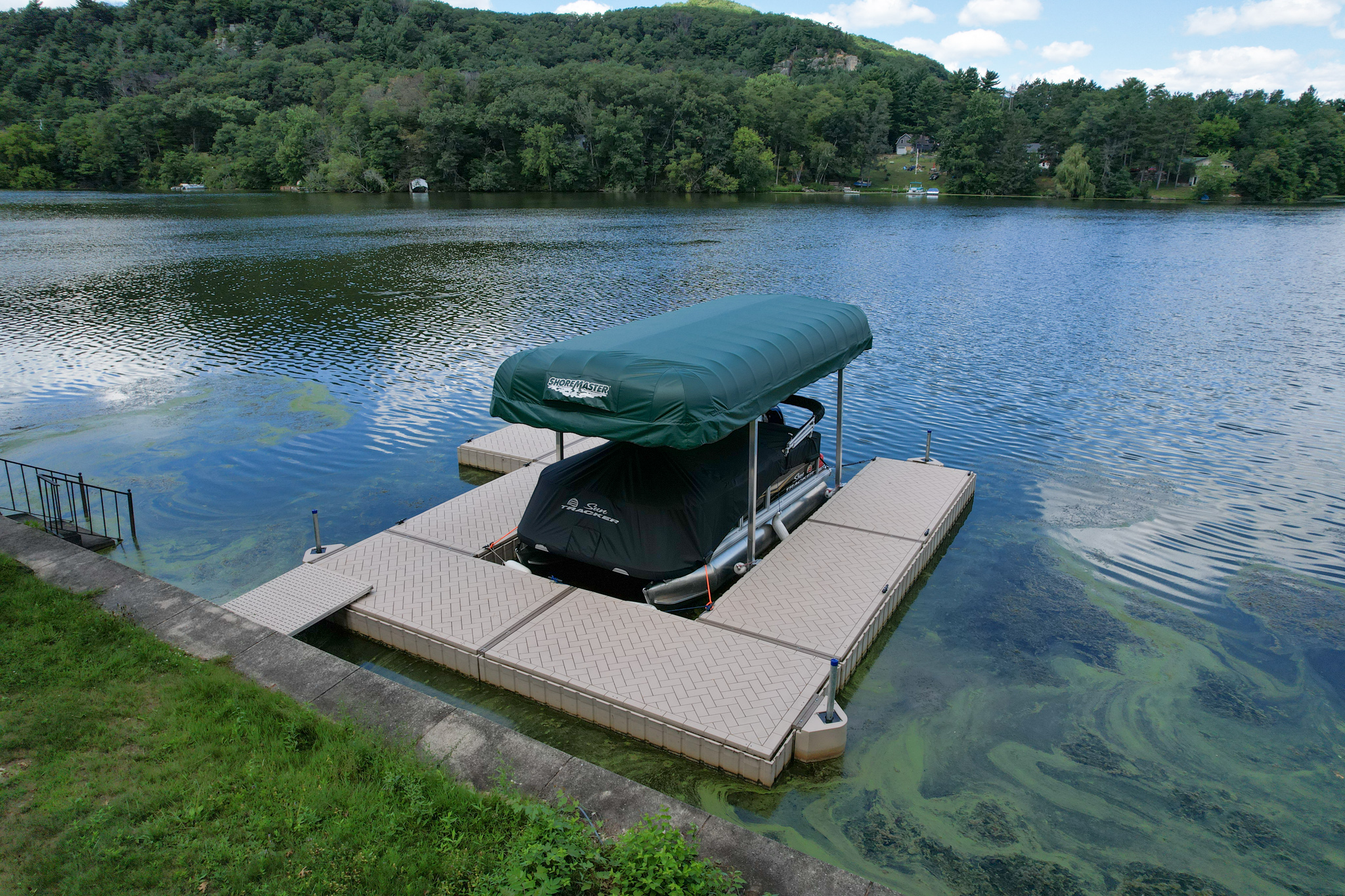
Taking it Out
If you live in an area with harsh winters, or your freezing temperatures start in autumn, it’s probably best to remove your dock for the season and install it once the spring thaw is well underway. Get a professional team involved, or ask some strong, experienced friends and family to give you a hand with the removal and storage. Get tools together beforehand, including a vehicle, winch, or another way to haul your dock out of the water. Make sure you wear the proper waterproof, windproof, and warm clothing that will allow you to use tools.
Unfasten and store the dock sections in an enclosed storage area if possible. If you can’t store them in a building, secure them on the shore, covering them loosely with a weighted tarp to protect them from the elements but keep water from accumulating and freezing inside the sections. Clearly mark anything stored on the shore to avoid accidents with skiers, snowmobilers, and other people and vehicles that come out in the winter.
Leaving it In
If it’s difficult or impossible to remove your dock from the water for the winter, you might be able to leave it in. If you live in a protected bay with no ice movement, you may be able to leave your dock in. If that’s the case, disconnect hinged connections and finger sections to allow straight sections to float separately. Disconnect your anchor chains and tie your dock to a tree or other solid object on the shore; this allows it to move freely with the water and settle along with the ice (which keeps it from getting lost if a big storm blows through). If there aren’t trees, loosening the anchor chains by a few feet will achieve similar results. A bubbler or de-icer is a good idea for systems that need to stay in the water to prevent ice accumulation.
If you choose to leave any dock system in your water over the winter, many warranties won’t cover any damage from ice floes or other winter conditions.
PolyDock Floating Docks
The good news is that PolyDock sections aren’t affected by extremely cold temperatures or ice. Assuming there’s nothing stored on the dock and you’ve kept the surface cleared of snow and other debris before it could freeze in, it only drafts a couple of inches of water. This means any ice pressure will push your dock sections up, rather than in, which reduces the likelihood of damage. If you live in an area with lots of pressure ridges or ice movements, pipes and pilings should be removed, and your dock system should be tied to a secure object on the shore with some slack in the line.
If you’re looking for more personalized recommendations for your shoreline or just want other advice on your PolyDock system’s winterization or removal, reach out to us. A local dealer will be an expert on your water and our products and be able to point you in the right direction.
FAQs
Q: Can I leave my dock in the water all winter without problems?
A: It depends on how your lake freezes and whether the ice moves, shifts, or stacks. In many areas, removal is the safest option because ice pressure can damage dock sections and anchoring.
Q: What winter conditions are the biggest red flags?
A: Shifting ice, changing water levels, strong winds, and exposed shorelines are the most common troublemakers. When ice moves, it can push and pull on dock sections in ways that cause cracking or warping.
Q: If I do remove my dock, what helps make spring setup easier?
A: Organize hardware, label sections if needed, and store everything on a flat surface so it stays straight. A little structure in storage saves a lot of time when you’re excited to get back on the water.
Q: Who can help me decide the best winter approach for my specific lake?
A: A local dealer is usually the best resource because they understand your regional winter patterns. They can also recommend stabilizers or anchoring strategies if your shoreline has special challenges.


