Key Takeaways
Learn what makes a floating dock ADA-compliant and accessible.
Discover PolyDock solutions for ramps, handrails, and transfer systems.
Understand key ADA standards for slope, width, and stability.
See how inclusive dock design benefits all users.
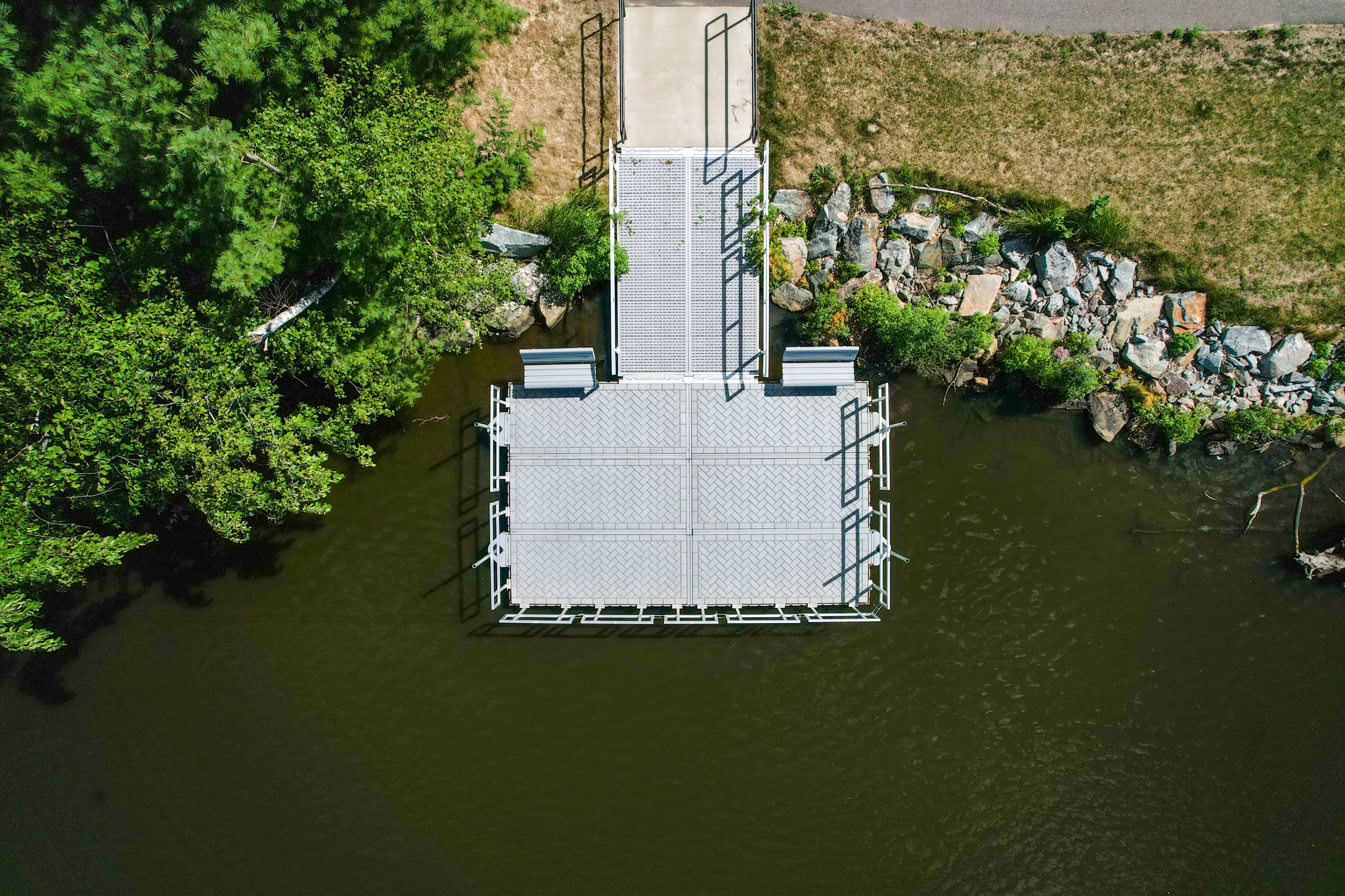
Why Accessibility Matters in Dock Design
In the U.S., public docks and private facilities used for commercial, municipal, or recreational purposes must comply with the Americans with Disabilities Act Accessibility Guidelines (ADAAG). This includes providing safe, navigable access routes, proper slopes, stable surfaces, and accessible transfer systems for boarding watercraft. Non-compliance can lead to legal issues, funding barriers, and fines (U.S. Access Board, n.d.).
For waterfront property owners, designing docks with accessibility in mind ensures that people of all ages and abilities can safely enjoy boating, fishing, swimming, and other recreational waterfront activities. Accessible docks open the outdoors to veterans, aging adults, people with mobility challenges, and families with strollers.
For marinas, parks, waterfront resorts, and municipalities, accessible docks broaden the potential user base. More inclusive facilities attract more visitors, support tourism, and align with community values around equity and public access.
ADA Standards for Floating Docks
While the ADA doesn't mandate accessibility for every single dock, it does set clear standards for newly constructed or altered facilities that are intended for public use, such as marina floating dock systems, parks, and other shared waterfront areas (US Department of Justice, 2012).
Under the ADA 2010 Standards – Section 1003: Recreational Boating Facilities, floating docks must comply with the following requirements:
Gangway Slope: Gangways are generally required to have a 1:12 slope (less than or equal to 8.33% grade). However, because floating docks rise and fall with changing water levels, floating dock gangways are not required to meet the maximum rise of 30 inches before a landing, and slopes may exceed 1:12 at times due to water fluctuations, provided the design minimizes steepness wherever possible.
Gangway Width: The minimum clear width for gangways is 36 inches to accommodate wheelchairs and mobility devices. In high-traffic marinas or waterfronts, wider gangways (up to 60 inches) are recommended to allow two-way passage and improve safety for all users. This space also makes it easier for wheelchair users to maneuver and board/disembark boats.
Edge Protection: Floating docks and gangways must include edge protection to prevent wheelchairs, strollers, or mobility devices from slipping off. This typically involves installing raised curbs, railings, or barriers along exposed edges. Handrails must be installed on both sides, extend fully along the sloped portion, and have a height of 34to 38 inches above the walking surface.
While private docks aren’t legally required to meet these standards, applying ADA principles is a great way to make your waterfront safer and more enjoyable for friends and family.
Accessibility Features in PolyDock Systems
While versatility, reliability, and ease of ownership are the key tenets of PolyDock Systems, our solutions also boast features that enable everyone to enjoy the spoils of waterfront living.
Slip-Resistant Surfaces: Each PolyDock section features a proprietary slip-resistant texture featuring a brick-herringbone pattern and a shot-peen finish, ensuring a sure-footed grip for your family and guests in any weather.
Stable Sections and Connections: The recessed chambers molded into the underside of each PolyDock section create a suction-like effect that anchors the dock to the water’s surface and minimizes lateral movement (Brinson Marine, 2023). Meanwhile, our connection system—featuring HDPE brackets and corrosion-resistant stainless steel rods—distributes wave energy across the entire dock, delivering a firm walking surface even in rough water conditions.
Modular Design for Custom ADA-Friendly Layouts: PolyDock is available in a range of section sizes, enabling owners to design layouts with wider walkways, larger maneuvering areas, and 60-inch passing zones where needed.
Safety Accessories: Our accessories catalog includes ADA-compliant gangways, ramps, and handrails. The precision-welded marine-grade aluminum ramps are available in 4′ x 4′ and 4′ x 8′ sizes, and are equipped with shore-end piano hinges for quick and easy setup and installation on seawalls, decks, or other shore-side platforms. Meanwhile, aluminum handrails come in 3’, 4’, 5’, 6’, 8’, or 10’ lengths.
Because each dock layout is unique, and different shoreline bottoms can vary from location to location, we offer a diverse collection of anchoring reinforcements and floating dock stabilizers to support various installation and waterfront challenges.
Designing an Accessible Waterfront Experience
Creating an accessible dock starts with understanding your environment. Begin by assessing your shoreline slope, water depth, and bottom composition. Consider who will use the dock (from older adults and young children to guests with mobility challenges) and identify the points where safe transitions and stable support are most important.
From there, add key accessories, such as wheelchair-friendly gangways, ramps, and handrails, to ensure safe, secure, and smooth transitions throughout the dock system. With PolyDock, designing an accessible waterfront experience is seamless. Its modular design allows you to easily add sections and integrate accessories and accessibility features, and reconfigure them for special events or as needs evolve.
Contact us today at (800) 328-8945 for more information, or enter your zip code in the dealer locator tool below to get a list of authorized PolyDock partners.
Real-World Accessible Dock Projects
When Jim Vuocolo took over River Beach Campground and Marina in Mays Landing, NJ, it had old wooden docks, which they had to take out of the water for winter storage. Aside from requiring more than 20 people to remove, the dock also required off-season repairs and even more upkeep by mid-summer. Moreover, the elderly campers and boaters didn’t feel particularly safe stepping onto the older docks.
Today, River Beach boasts an 80-slip marina supported by over 90 PolyDock sections, all of which remain in the water year-round. More importantly, their elderly guests now feel very comfortable coming out and enjoying the water on the docks.
“It’s a really stable platform,” says Jim. “We’re extremely happy. I would recommend the product to anybody. If you’re thinking about investing in a dock system, this is the way to go.”
FAQs
What makes a dock ADA-compliant?
A dock is considered ADA compliant when it meets the requirements outlined in the ADA 2010 Standards for Recreational Boating Facilities, including proper gangway slopes, minimum clear widths, slip-resistant surfaces, and accessible routes to and along the dock. It must also provide required edge protection, handrails where needed, and appropriately designed transfer or boarding areas. Compliance is determined by both design and installation, ensuring safe, independent access for people with disabilities.
How wide should an accessible gangway be?
The ADA requires a minimum clear width of 36 inches for gangways used on accessible routes. Many facilities use gangways 48 to 60 inches wide to accommodate two-way traffic, mobility devices, and make wheelchair maneuvering easier.
Can floating docks be fully ADA-compliant?
Yes, floating docks can be fully ADA compliant, even with fluctuating water levels. The ADA allows flexibility in gangway slope requirements for floating structures, as long as the design meets the 1:12 slope under typical conditions and includes proper width, handrails, edge protection, and slip-resistant surfaces. With the right gangway length and layout, floating systems can meet or exceed accessibility guidelines.
What accessories help improve dock accessibility?
Accessories such as ADA-compliant gangways, ramps, and handrails play a key role in enhancing dock accessibility. Stable, slip-resistant surfaces also make it easier for users with limited mobility to move safely around the dock. Meanwhile, edge protection, grab bars, and wider dock sections further support inclusive, user-friendly waterfront access.
References:
U.S. Access Board (n.d.). Guide to the ADA Accessibility Standards
US Department of Justice, Civil Rights Division (March 8, 2012). Americans with Disabilities Act Title III Regulations
Brinson Marine (2023). Looking for Floating Dock? Why ShoreMaster Polydock might be the fit for you!


